Dr Asha Tonkin-Reeves
Characterising the Lysosomal Proteins LAMP-2A and LAMP-2B in Breast and Brain Cancer Cells
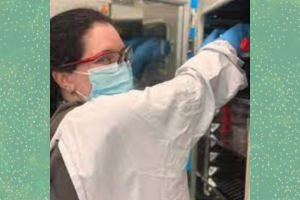
In Australia, cancer results in more than 48,000 deaths each year, which is projected to rise in the coming years despite the advances in early diagnosis and treatment. Metastasis is the primary cause of mortality, yet there are currently no effective treatments for eradicating metastasis. Thus, identifying and investigating new clinically relevant therapeutic targets for metastatic treatments is essential. One potential therapeutic target that has emerged recently is autophagy.
Autophagy is a cellular process where damaged organelles and proteins are degraded by an organelle known as the lysosome. The role of autophagy in normal cellular physiology has been well-characterised; substrates are degraded to their base components to be re-used by the cell and maintain homeostasis. However, its role in cancer is unclear and, in many instances, paradoxical. Furthermore, autophagy can be preventative in the early stages of cancer development while supporting cancer growth, spread and survival in later stages. Drugs that inhibit autophagy have shown promising results in decreasing the aggressive phenotype of cancer cells. In particular, the ability of autophagy inhibitors to reduce therapeutic resistance in many cancers has resulted in numerous clinical trials with these therapeutics. However, although they inhibit autophagy, most of these therapeutics are not specifically targeted towards autophagy. Thus, further investigation into the mechanistic action of autophagy and the subsequent identification of new molecular targets is warranted.
One molecule central to autophagy and a potential target is the lysosomal-associated membrane protein (LAMP-2). LAMP-2, however, has three splice variants, named LAMP-2A, LAMP-2B and LAMP-2C. While the role of LAMP-2A in autophagy and cancer is well known, the role of LAMP-2B and LAMP-2C remains unclear. The specific functions, roles, and differences of the isoforms remain unclear, especially in the context of cancer. The findings from this study will help characterise these LAMP-2 isoforms in cancer and determine the effect various stresses have on the behaviour of these isoforms, thereby identifying whether they are appropriate therapeutic targets.
This thesis's findings suggest that the regulation of the isoforms in response to various stimuli is tissue-specific and stress-specific. Furthermore, the acquisition of a more aggressive phenotype in breast cancer did not affect LAMP-2A but resulted in a decrease in LAMP-2B-induced, which was seen in agar-selected cells and cells undergoing epidermal growth factor (EGF)- induced epithelial to mesenchymal transition (EMT). In glioblastoma (GBM), only prolonged exposure to anoxia increased LAMP-2A or LAMP-2B expression in several cell lines. Additionally, Temozolomide (TMZ) did not affect the isoforms. However, lysosomal inhibition improved efficacy in RN1 GBM cells, suggesting a dependency on autophagy in these cells.
This thesis determined that the LAMP-2 isoforms, LAMP-2A and LAMP-2B, have unique expression patterns in cancer phenotypes and under stress. They also did not correlate to a worsened cancer phenotype in breast or GBM cancer cells, in fact, LAMP-2B seemed to decrease in these situations. Suggesting that the use of LAMP-2 as a prognostic marker be reconsidered until the unique functions of the LAMP-2 isoforms are understood.
Supervisors
School
Medicine, Western Health