Dr Emily Munro-Harrison
Re-storying place, connection and belonging: Aboriginal and Torres Strait Islander young people making space and creating futures in Narrm
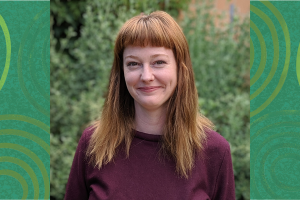
Dr Munro-Harrison graduated in 2024.
Abstract
Constructs of Indigeneity have been the locus of settler colonial interest and control since colonisation in Australia. Through historical policies of displacement, and contemporary normative processes that question the authenticity and belonging of Aboriginal and Torres Strait Islander people, urban places continue to be sites of erasure and non-belonging. However, cities will always be Aboriginal land, and places of cultural resurgence, renewal and regeneration. Internationally, a growing body of literature investigates experiences of First Nations young people in urban places, but in Australia this is lacking. This thesis explores how Aboriginal and Torres Strait Islander young urban people in Narrm (Melbourne) practise and connect to their Indigeneity, as they come into relation with place, community, and their engagement with institutional regimes.
This thesis makes an original contribution to knowledge by articulating how Aboriginal and Torres Strait Islander young people in Narrm engage in processes of re-storying place, cultural resurgence and presencing as assertions of belonging, and enacting responsibilities of relationality in generating desire-based futures. Indigenous women’s standpoint theory, and a desire-based framework guide the methodological approach. Yarning methodology was used to develop partnerships with collaborating organisations, to guide the direction and methods of engagement with participants. Theories of relationality, youth refusal, resistance, counterstory, and cultural resurgence are used to understand the key formulations of Indigeneity for young people.
To investigate the research question, Aboriginal and Torres Strait Islander young people (aged 16-30) living in Narrm were engaged across four sites. These sites included – an Aboriginal youth drop-in program; an arts mentoring program; a cultural support program for incarcerated First Nations men staffed by First Nations and non-Indigenous volunteers; and an Indigenous student centre at a university.
Resistance and refusal are theorised as engagements of power by young people in their interactions with service systems that problematise and imagine their limited potential and future possibilities. Building on this, counterstory is a way to understand these acts of resistance and refusal by participants. The theory of re-storying is offered, to interpret how young people connect and engage with place in ways that are not a counter to colonisation, but a re-storying and continuation of Aboriginal and Torres Strait Islander presence. Presencing is in the everyday acts of resurgence, it resists colonial erasure and is a reminder of the ongoing relationships and connections of Aboriginal and Torres Strait Islander communities to place. Acts of cultural resurgence and renewal engage young people in intergenerational practises of relationality – a responsibility of ongoing learning and connection to claiming Indigeneity.
Culture, belonging, identity and self-determining futures are protective factors for the health and wellbeing of Aboriginal and Torres Strait Islander people and communities. This thesis shows the ways that participants are engaging and practising their identities in Narrm and navigating paths for desire-based futures.
Supervisors
School
School of Population and Global Health
Scholarship
Lowitja Institute