MAI doctoral conference reflections
The Melbourne Poche Centre for Indigenous Health was once again invited to the MAI doctoral conference this year. The conference is an opportunity for emerging Māori and Indigenous scholars to present papers in a supportive forum, and meet with other doctoral candidates and established academics.
MDHS PhD scholar Debbie Haynes, Education PhD scholars Mel Serrurier and Justin Wilkey share their reflections from the 2024 Māori and Indigenous (MAI) Doctoral Conference.
What did it feel like being welcomed into the space and conference?
Mel: The conference was very welcoming and I felt comfortable to share and be vulnerable with people in the space. It was a lovely experience and very motivating. It was great to build connections and embrace other cultures in a safe and respectful environment.
Debbie: Marinating in Māori culture and being welcomed traditionally ignited my advocacy for bringing culture more alive in my life and community. I felt my ancestors walking into that space with me, proud, strong and supportive. It was one of the best experiences of my life.
Justin: Arriving at the MAI conference felt culturally nourishing and supportive. To be surrounded by Indigenous peoples from other continents and regions of the world was energising and provided a sense of empowerment, that as Indigenous peoples our voices and expertise very much belongs and is needed in research spaces. To be immersed in and learn some of the local Māori culture was a humbling and enriching experience.
What ideas were sparked by the guest speakers and attendees?
Mel: I loved the different ways speakers presented their work. They were so passionate and lively and really involved the audience during every aspect.
Debbie: Uses of Indigenous methodology for lived experiences, that the PhD journey is different for everyone and to ride with it. There’s many Indigenous scholars throughout the world who are undertaking interesting and important research to capture culture in the literature.
Justin: As Indigenous peoples the importance of sharing our knowledge in non-Indigenous spaces is important, however it raises issues like data sovereignty. The insightful panellists across the week challenged my understanding about how we continue to progress our work without having it harvested in ways we haven’t agreed to. Aunty Tracey’s Keynote about ‘love letters to ourselves’ reminded me of the commitment we must uphold in taking care of ourselves and our loved ones.
What aspects did you find beneficial?
Mel: Hearing other people’s journey throughout their PhDs and at all different parts of their lives was inspirational. I found it really beneficial to present my research in such a quick time, as it allowed me to consolidate my ideas and narrow down my focus . It was also great to get to know my fellow Uni Melb scholars on a more personal level and be able to have a yarn.
Debbie: Everything. I truly cannot pick apart the best aspects. The whole experience has changed me, my thinking and how I think about my research.
Justin: The breadth of presentations and ongoing commitment to strengthening our presence in research spaces as Indigenous peoples. The opportunity to celebrate the work of others and recognition that what we as Indigenous peoples are doing is having major impacts for First peoples around the world.
What things have you brought back form the conference?
Mel: I felt extremely motivated after attending the conference. I felt that my passion for my PhD had come back and I was ready to battle the writing again when I returned home. I left there with a positive perspective that my research was important to this time and space. I also made a lot of connections with others in the Education space. It made me do some deep reflecting on culture and experiences.
Debbie: New connections with Emily and Justin. New connections with mob across Australia. International connections with researchers. New perspectives on using Indigenous methodologies and how they are used. New perspectives on creating songs in language, dance ceremony and the beauty and richness of appreciation shown through language.
Conversations around research and lived experiences of culture.
Justin: The many synergies that exist between Indigenous peoples were displayed through the sharing of knowledge and the building of relationships at MAI. This occurred irrespective of the professional discipline in which presenters came from all. All the work presented demonstrated a commitment to advance the lives of Indigenous peoples through research. The ability to share my work and lived experiences as an Indigenous person at MAI was enhanced by the relationships, I have gained that will continue to flourish beyond the conference.
What would you say to anyone considering attending MAI next year?
Mel: I definitely recommend the MAI conference next year. It was a great opportunity and experience. I honestly had the best time. It put a lot of things into perspective for me and I was able to lean on my fellow peers during my research challenges.
Debbie: Allow yourself to let go and marinate in the MAI.
Justin: Attending and presenting at MAI is one of the most positive and supportive experiences I have had throughout my doctoral studies. The ability to learn from other Indigenous peoples alone is a major reason why if given the chance as an Indigenous student researcher you should attend MAI.
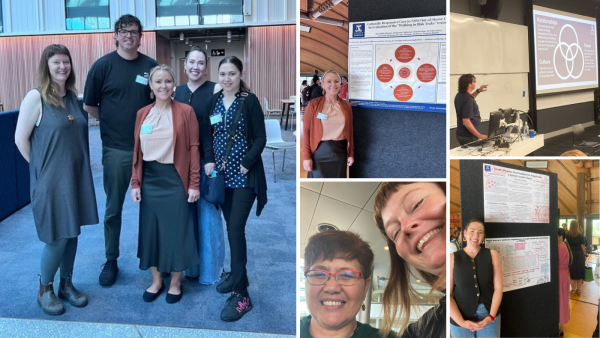
Left: Emily, Justin, Debbie, Ruby and Mel
Top middle: Debbie with her poster presentation
Top right: Justin presenting his research
Bottom middle: Emily with Dr Monica Koia
Bottom right: Mel with her poster presentation